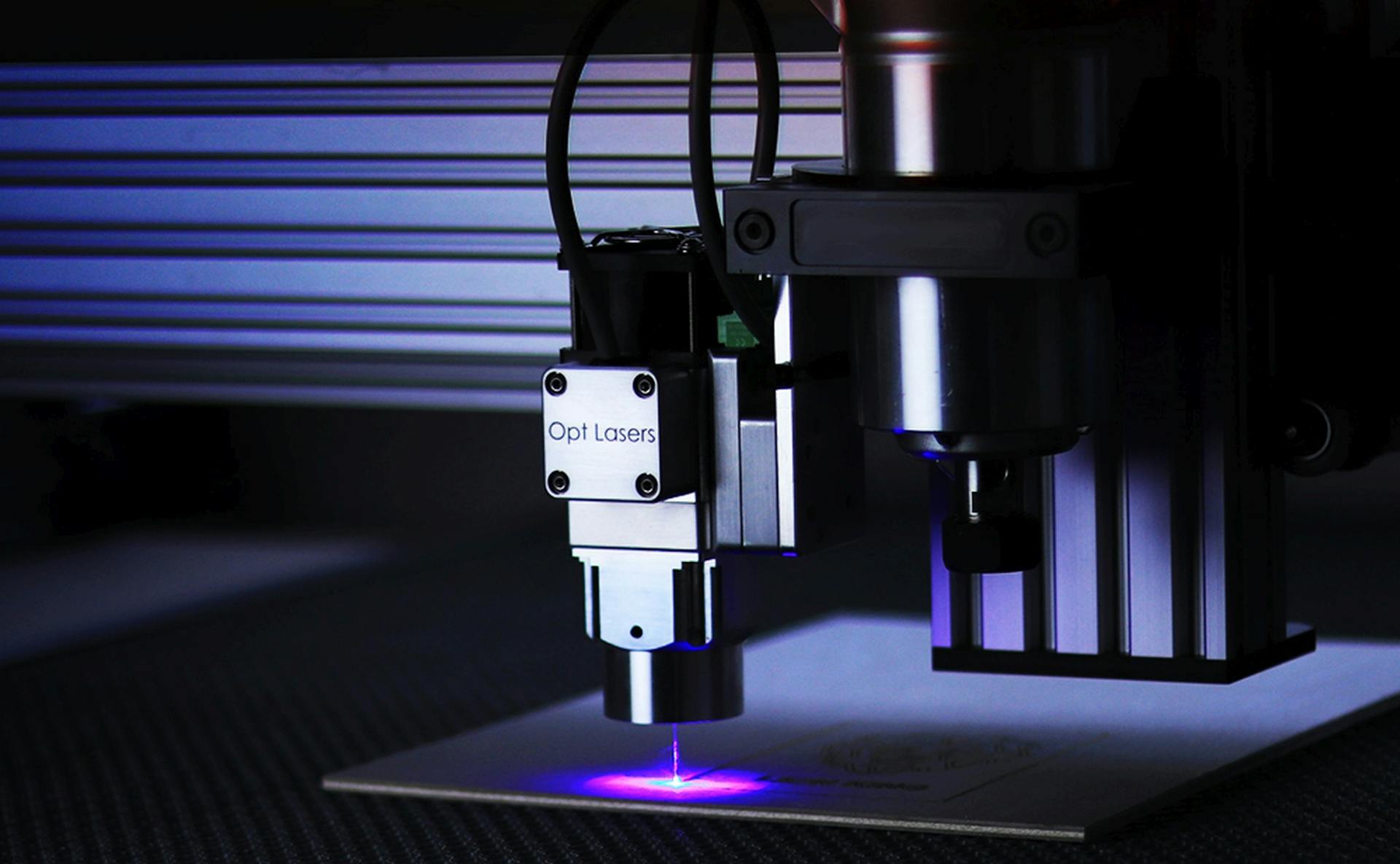
At its core, a laser is a concentrated beam of heat. While incredibly versatile, this thermal interaction has physical and safety limits. Some materials, when hit with a laser beam, release toxic or corrosive outgassing—like PVC—meaning a laser should never be considered for those applications.
However, for many other projects, a laser and alternative technologies can work equally well. The goal of Laser Learning Center is to make you aware of the entire fabrication landscape so you can choose the best tool for your specific production goals.
In this section, we explore similar and complementary technologies. Some work better for specific finishes, some are inherently safer for certain substrates, and some offer unique capabilities a laser physically cannot. This includes Digital Printing for full-color graphics on virtually all materials with optimal adhesion, Dot Peen Marking for creating permanent depth without the need for material removal, or Abrasive Sandblasting for achieving deep, dimensional textures on glass and stone without the risk of thermal micro-fracturing.
We also look at utilizing CNC Routers and Rotary Engravers to process thick materials of 1″ (25mm) and over. Because a laser beam is focused to a point, it naturally creates a tapered edge as it cuts; mechanical tools avoid this limitation, providing a perfectly straight, vertical edge. Furthermore, because these are mechanical tools rather than thermal beams, you can safely cut any type of foam and even engrave chrome-tanned leather. These are processes where a laser should be avoided due to the release of hazardous and carcinogenic byproducts, such as Hexavalent Chromium (Chromium VI).
As an independent information site, we aren’t biased toward one beam. Our mission is to ensure you have the right technology for your material, your safety, and your business.